

As shorter, darker days reduce mental and emotional wellbeing, many may notice a marked change. Medical practitioners refer to this condition as Seasonal Affective Disorder (SAD); in yogic terms however, this imbalance manifests as excess Tamas (inertia/darkness) with inadequate Prana (vitality/energy).
For us to combat winter’s heavy, sluggish mood, our practice must become active, heating and stimulating. By engaging dynamic Asana poses we generate internal heat (Tapas) and forcefully move stagnant energy away from stagnation – creating both physiological and psychological transformation.
Here are three active practices and their supporting science which have proven themselves as successful antidepressant strategies:
Start Off Right With Dynamic Surya Namaskar (Sun Salutations).
Sun Salutations can be an immediate and comprehensive remedy to combat low mood. This full-body sequence honors and absorbs some of the solar energy we don’t get enough of during wintertime.
Informative Edge: Vagal and Endocrine Responses
- Vagal Nerve Stimulation: The sequence’s rhythmic forward folds and backbends (Uttanasana and Urdhva Mukha Svanasana) help stimulate the Vagus Nerve, the primary link between your brain and major organs of your body. Engaging it through deep controlled movement shifts your nervous system from its stressed sympathetic (fight-or-flight) state into its restorative parasympathetic state for maximum health benefits.
- Endocrine Benefits of Yoga Flow: The dynamic flow puts gentle pressure on both thyroid and adrenal glands (especially during poses like Bhujangasana and Urdhva Hastasana), stimulating their production of endorphins and serotonin which are natural mood stabilizers often lacking during periods of depression. The resultant hormonal cascade releases mood-elevating chemicals like endorphins and serotonin which serve to lift mood-elevating chemicals that help lift feelings of depression.
- Tip for Practice: Utilize Ujjayi Breath (the “Victorious Breath”). The sound and resistance of Ujjayi intensifies internal heat production and releases any remaining tamasic dullness in the system.
How to Do
- Start by standing on top of your mat with feet together and arms at your sides, inhaling deeply before exhaling with palms open towards your heart in Namaste gesture.
- On an inhale, raise both arms up, arching back gently. On exhale, fold forward with hands next to feet.
- With your right leg back into Horse Riding Pose and left leg in Mountain Pose with heels reaching forward toward the mat, breathe out slowly as you step your right and left leg backward.
- Step right leg back into Horse Riding Pose as you exhale. Then step both right legs back in simultaneously as part of Mountain Pose (both with heels reaching towards mat).
- Maintain breathing while lowering knees, chest, and chin to the floor in Ashtanga Namaskar. As you Inhale, and lift into Cobra Pose; exhale back down into Mountain Pose.
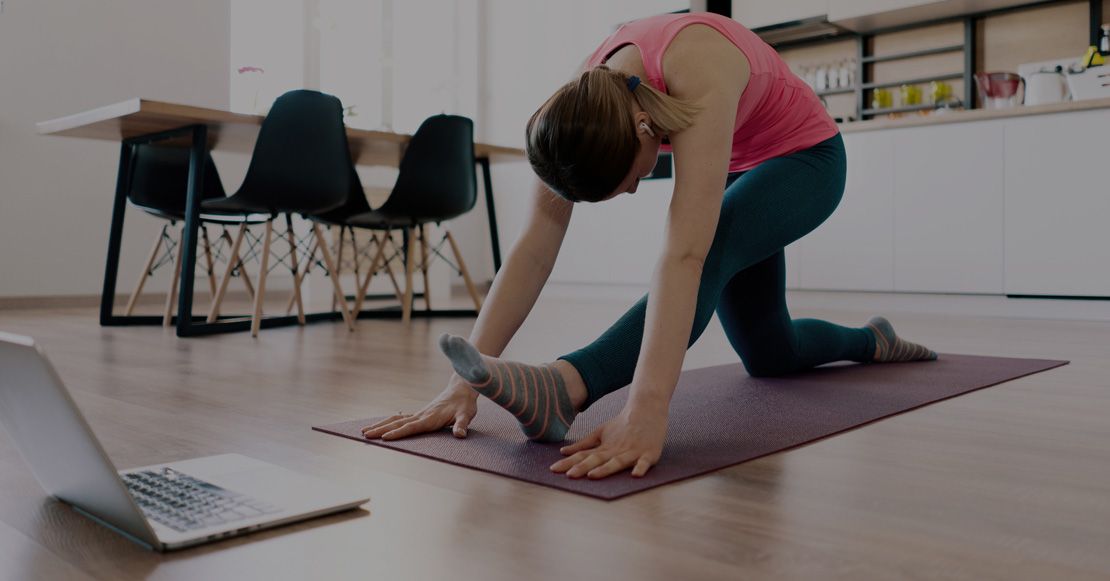
- With your right leg forward and exhale, move into Horse Riding Pose. Exhale, step your left leg forward into Forward Fold pose.
- On an inhale, begin an arching backbend pose. On exhale, return to Namaste.
- Repeat the sequence beginning with the left leg until one full round is completed.
Grounding Power: Pawanmuktasana Group 3 (Shakti Bandha Series).
This set of practices are designed to increase energy flow throughout the body as well as help clear neuro-muscular blockages. By methodically opening the joints and stimulating the subtle channels, these practices clear energetic blockages along the spine as well activating the lungs and heart, assisting healthy endocrine function.
They are particularly helpful for those with low energy, back stiffness, menstrual discomfort or weak pelvic organs and musculature. The series can also be practised safely post-partum to aid in regaining muscle tone in an soft belly, and lax pelvic floor.
The Shakti Bandha Series may be practiced by anyone in good physical condition. But in the occasion of any serious ailment, it is always better if you follow the guidelines of an experienced yoga therapist. Always respect the particular contraindications of each asana.
These movements are easier to learn for right-handed persons when they start learning those from the right side. After becoming comfortable with those, they should repeat the exercises on the left to prevent imbalance and wasting of the extremities, nerves, and neuromuscles.
This series is comprised of the following poses:
- Rajju Karshanasana (Pulling the Rope Pose) – stimulates shoulder mobility and arm strength, pranic movement in the upper region of the body.
- Gatyatmak Meru Vakrasana (Dynamic Spinal Twist) – creates flexibility in the spine, massages abdominal organs and releases tension along the spine.
- Chakki Chalanasana -Tones abdominal muscles and pelvic organs, soothes lower back, while promoting digestion and reproductive health.
- Nauka Sanchalanasana (Rowing the Boat Pose) – strengthens the abdominal muscles, hip flexors, and lower back, stimulates the prana in Muladhara chakra (the root center), and awakens kundalini.
These asanas are an integrated, balancing sequence practiced to balance energy flow and rejuvenate the body for maximum vitality.
Cleansing Clarity: Stimulating Twisting Poses
Twisting poses go beyond simply increasing spinal flexibility; they are an invaluable way of cleansing internal organs and clearing away mental clutter. By twisting our torsos, we focus our energies to target energy centers of our bodies as well as digestion pathways.
The Informative Edge: Detoxification and Manipura Chakra
- Visceral Compression and Circulation: Engaging in Ardha Matsyendrasana (Half Lord of the Fishes), you compress abdominal organs like the liver, pancreas, and intestines before unleashing an abundance of fresh, oxygenated blood upon release – this process aids in efficiently clearing away metabolic waste that contributes to fatigue and low energy.
- Manipura Chakra Activation: Situated at the solar plexus, Manipura Chakra governs transformation, personal power, and digestion. Engaging this center through twisting helps us “digest” negative experiences more easily; when balanced properly we feel confident, motivated, and clear–an antidote to depression.
- Practice Tip: Always twist on an exhale; the exhale helps contract your abdomen naturally and facilitates deeper, safer twists. Keep breathing smooth and unforced during this pose.
Winter Blues with Yoga Wellness Strategy.
Use your mat not just as an exercise space but as a deliberate way to create heat, elevate your heart rate, and stimulate your nervous system this winter. By engaging in dynamic practices like Sun Salutations, strong standing poses, and cleansing twists, you activate your own powerful inner pharmacy for balanced and vibrant living during the colder season. If you want to deepen this experience, the 200 Hour Yoga Teacher Training in India at Gyan Yog Breath offers an excellent opportunity to explore these practices at a transformative level.