

Are you noticing the first signs of menopause – or are you already right in the middle of it? There are so many stories and myths circulating about this phase of life, and many of them sound frightening: If you don’t act immediately, everything will start going downhill from here…
Let’s clear that up. The truth is: we are all different. Menopause doesn’t follow one fixed script, and there is no single solution that works for everyone.
If you’re curious about how yoga for menopause can support you during this time, keep reading. I’ll share practical ideas you can start using right away.
And don’t worry about losing your beloved routine. This article isn’t about telling you what you should or shouldn’t do. It’s meant to inspire you to listen more closely to your body. And if you notice that your current practice no longer feels quite right, you’ll find gentle alternatives and helpful additions to your yoga for menopause journey that you can draw from.
What actually happens during menopause?
Menopause is a natural phase of hormonal change in midlife. Fertility slowly comes to an end, cycles become irregular and eventually stop altogether.
During menopause, estrogen and progesterone decline, but they are part of a much larger hormonal shift. The ovaries also reduce their production of testosterone, which plays a role in muscle strength, energy, libido and motivation. At the same time, the brain increases the release of FSH and LH (follicle-stimulating and luteinizing hormones) in an attempt to stimulate the ovaries, which can contribute to symptoms like hot flashes and sleep disruption. These changes interact with stress hormones such as cortisol and with insulin regulation, which is why menopause can influence weight distribution, blood sugar balance and how resilient the body feels overall.
This transition doesn’t happen overnight. It often takes several years, during which hormonal fluctuations may lead to symptoms such as hot flashes, sleep disturbances, mood changes or irregular cycles – though none of these are guaranteed. The risk of osteoporosis can also increase, as lower estrogen levels affect bone metabolism.
Does that sound uncomfortable? Yes. But the good news is: there is a lot you can do to support yourself.
Why yoga can be especially valuable during menopause
If you already practice yoga, it’s probably because it helps you feel better – especially during stressful times or periods of transition.
Research suggests that yoga can have a positive effect on both physical and emotional menopausal symptoms, including sleep problems, anxiety, low mood and elevated blood pressure. Especially now, your yoga practice can become a steady anchor – something that helps you move into this new phase of life with more calm, confidence and optimism.
Yoga should be seen as a supportive practice, not a replacement for medical care. If symptoms persist or worry you, always consult your gynecologist.
Yoga for common menopausal symptoms
If you’re dealing with specific symptoms, yoga offers countless ways to address them – depending on what you’re experiencing right now. Take a moment every now and then to check in with yourself and ask: What do I truly need today?
Rather than pushing the body, we recommend starting with a Pawanmukta Asana series—a staple of authentic yoga teacher training in India to gently mobilize the joints and support circulation and energy flow. You may choose Series 1, 2 or 3, or combine elements of the first and third series, depending on how your body feels. From there, move into mild, nourishing stretches and slow, flowing movements, such as a gentle wave between Balasana (Child’s Pose) and Bhujangasana (Cobra Pose)—inhaling deeply as the heart opens, exhaling back into rest. These techniques are often core components of a 200 hour yoga teacher training in India focused on women’s health
Hip openers and soft stretches for the pelvic area are especially supportive at this stage. Postures like Butterfly Pose (Titali Asana), forward folds, or a gentle, supported backbend with a bolster along the spine can create a sense of space while offering a subtle, comforting massage to the lower abdomen, uterus and ovaries.
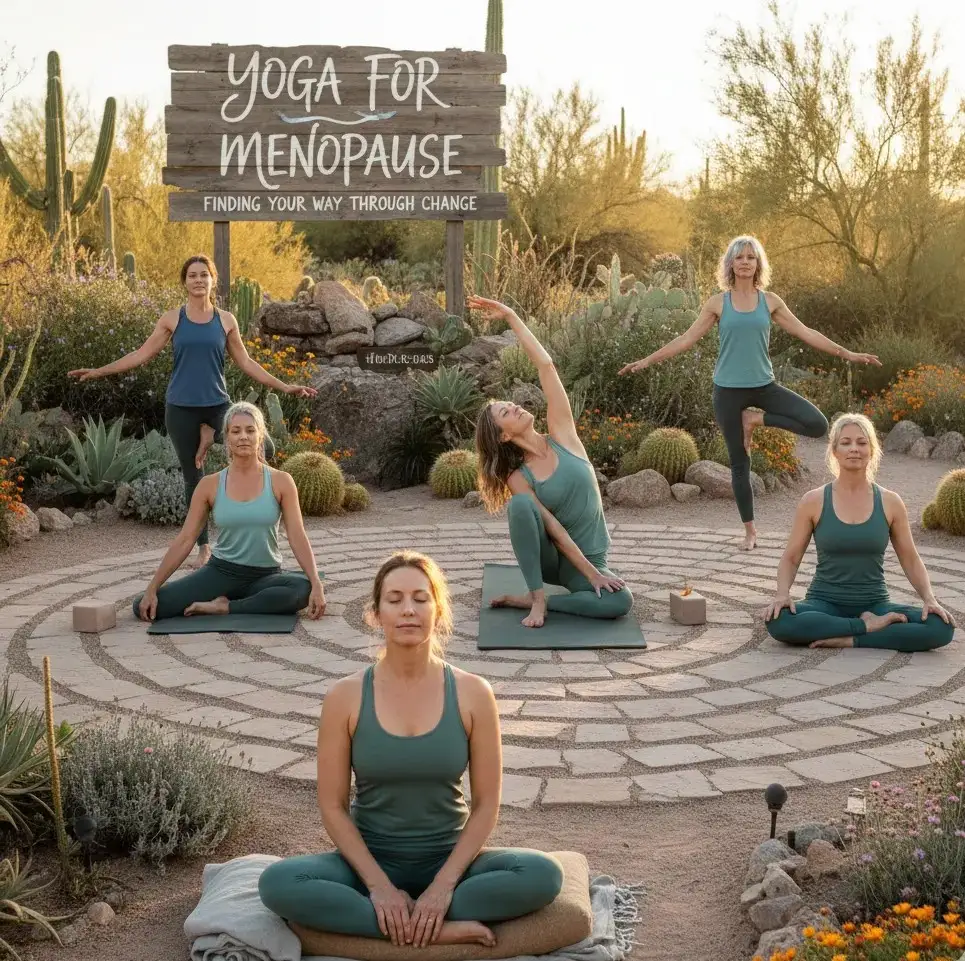
Throughout the practice, slow and conscious breathing is key, as anything that stimulates the parasympathetic nervous system helps counterbalance stress-related symptoms. Gentle balancing postures such as Tree Pose or Palm Tree Pose support coordination between the left and right sides of the brain and encourage mental steadiness.
Because hormonal changes interact closely with stress hormones, the practice should never feel like a hard workout or create additional pressure. Instead, regular breathing combined with moments of deeper, more mindful breath allows the nervous system to settle. For those looking to master these nuances, a 500 hour yoga teacher training provides the advanced anatomical knowledge needed to adapt poses for hormonal shifts.
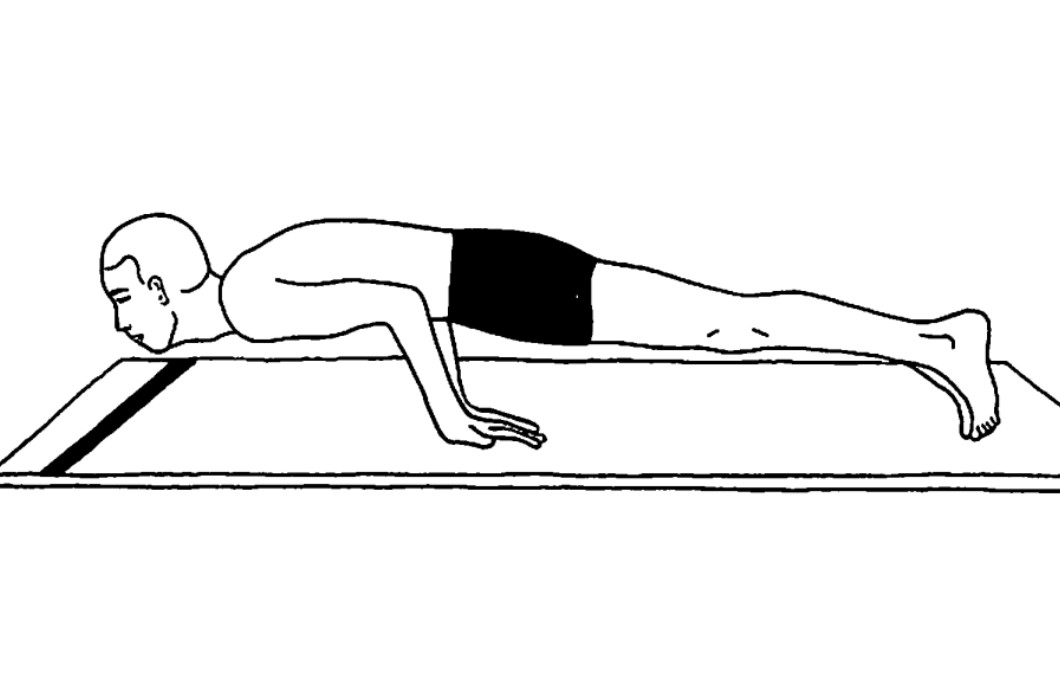
Light strengthening postures such as Santolanasana (Plank Pose) and mild backbends like Half Moon Pose (Ardha Chandrasana) or Camel Pose (Ustrasana) can help maintain strength and vitality without overstimulation. Beyond asana, pranayama practices such as Anulom Vilom or Nadi Shodhana are highly recommended, as they help regulate the nervous system and often bring an immediate sense of calm, supporting emotional balance, easing inner restlessness and softening mood swings.
Our tip: consistency matters more than intensity. Practicing for 20 minutes a day is often more effective than one long session per week.
If you feel constantly stressed, irritable or struggle with sleep, creating a realistic and regular routine is especially important
Pelvic floor yoga for posture, back pain and bladder weakness
Our tip: include targeted exercises that support pelvic floor elasticity.
A healthy pelvic floor provides stability without tension. Especially during menopause, this often-overlooked area deserves extra attention. With specific exercises, you can learn to sense and consciously control both activation and relaxation. This can improve posture and help prevent back pain, joint discomfort or bladder issues
Brain fog and forgetfulness
Our tip: meditate regularly to train focus and clarity.
Many yoga practices are, at their core, concentration exercises.
Simple meditation techniques can be especially supportive during this phase. Sit comfortably on a cushion or bolster, allowing the spine to rise naturally, and practice Aum meditation by gently chanting Aum for 10 to 15 minutes. Afterwards, remain seated in silence for another 5 to 10 minutes, letting the effects settle. This practice is often experienced as deeply calming, balancing and heart-opening. Alternatively, you may choose a quiet seated meditation focused on the breath: inhale for a count of three and exhale for a count of six, maintaining this gentle rhythm for 10 to 15 minutes. This extended exhalation signals safety to the nervous system, helping the mind slow down and supporting clarity, presence and emotional ease.
Let yourself be supported
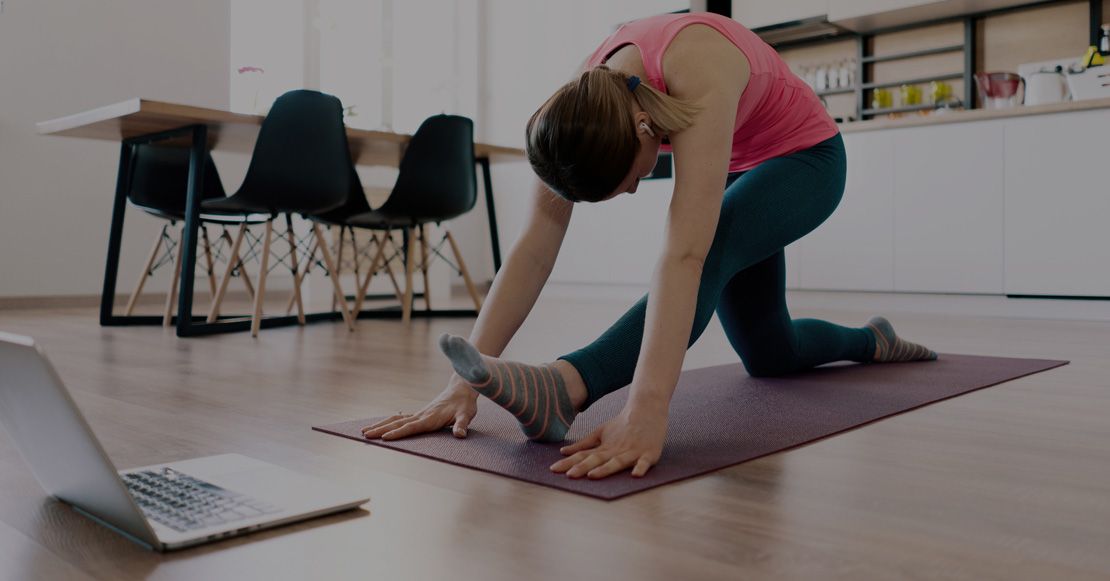
If you don’t currently have a regular practice or feel unsure where to begin, guided programs can offer orientation and reassurance. Instead of jumping from one video to the next, a well-structured course can help you feel held and informed.
Short, daily practices can be especially valuable on busy days, and many teachers recommend combining home practice with occasional studio classes to benefit from personal guidance and longer sessions.
Now is the time for self-care: Yoga for Menopause
Nothing is more constant than change. Yoga is a powerful tool for meeting life’s inevitable transitions with acceptance – and sometimes even with joy.
Be gentle with yourself. Make time for your practice and for listening to your body. Say no more often when your energy is low. Nourish yourself with wholesome food. Don’t let yourself be unsettled by fear-based narratives.
Talk about menopause with the women around you instead of keeping it a taboo. We will all go through it sooner or later. Sharing experiences and learning from one another can make this phase feel far less lonely. I wish you ease and enjoyment in your practice.